

Some rooms stay cold because the warm air from your furnace isn’t reaching them. The most common causes are a dirty furnace filter, blocked or closed vents, leaky or poorly designed ductwork, and a room that gets more heat loss than the rest of the house. Most of these are fixable, and a few you can check yourself in about ten minutes. Below are the 7 causes we run into most, plus what to do about each one.
In Port Huron, the nighttime low falls below freezing about 133 days a year, so a cold room isn’t just annoying. It’s a problem you live with for months. The good news is that “my furnace can’t keep up” is rarely the real answer. Usually the heat is being made just fine and something is getting in its way.
1. A Dirty or Clogged Furnace Filter
This is the first thing we check. A clogged filter restricts airflow, so less warm air makes it through your ducts, and the rooms farthest from the furnace are the first to notice. It can also make the furnace overheat and shut itself off.
The fix: Pull your filter and hold it up to the light. If you can’t see through it, replace it. Plan on checking it at least every one to three months during heating season. We wrote more about this in our post on why regular air filter changes matter.
2. Closed or Blocked Vents
It sounds too simple, but we see it all the time. A couch pushed against a floor register, a rug over a vent, or a register someone closed years ago and forgot about can leave a room cold even though the furnace is working perfectly.
The fix: Walk through the house and make sure every supply register is open and nothing is sitting on top of it. Registers on a forced air system can usually be adjusted to change how much air flows and in which direction, so check that the one in your cold room is fully open.
3. Leaky Ductwork
Your ducts are the highway that carries heated air to every room. If there are holes, gaps, or loose connections along the way, a lot of that air never arrives. ENERGY STAR says that in a typical house, about 20 to 30 percent of the air that moves through the duct system is lost to leaks, holes, and poorly connected ducts, and it lists rooms that are difficult to heat and cool as a common sign.
Leaks are even more of a problem when ducts run through unheated spaces like an attic, crawlspace, or garage, because you’re heating the air and then losing it before it gets to you.
The fix: Duct sealing professionals seal the gaps with mastic and can insulate ducts that run through cold areas. ENERGY STAR also warns against using regular duct tape because it doesn’t last.
4. Ductwork That Was Never Designed Well
Even if the ducts are tight, the layout might be the problem. A forced air system sends air through ducts and vents, and if the ductwork wasn’t installed or sized well, some rooms get less than their share. This is especially common in older homes and in homes that have been remodeled.
The fix: A technician can look at your duct layout and airflow to find where it falls short. Sometimes the answer is adjusting or rebalancing what you have. Other times it means adding or resizing a duct run.
5. A Room That Loses Heat Faster Than the Others
Some rooms are just harder to keep warm. Think about a bedroom over the garage, a sunroom, a room with a lot of windows, or a room on the north side of the house. If the heat is getting there but leaking out, it’ll still feel cold.
The fix: Start with the cheap stuff. Add weatherstripping around doors, caulk gaps around windows, and use heavy curtains at night. If a room has always been an issue, ask a technician about insulation or duct changes for that space.
[INSERT: a real example, like an addition or bonus room in the Port Huron area that was never comfortable and how it was solved]
6. One Thermostat Trying to Control Everything
If your whole house is controlled by a single thermostat in the hallway, it’s measuring the temperature in one spot. The thermostat might say 70 and be satisfied while your back bedroom sits at 62.
The fix: There are a couple of options. A zoning system uses dampers in the ductwork to send air where it’s needed, with separate thermostats for different areas. For a single room that just won’t cooperate, like an addition or finished basement, a ductless mini split can give that space its own heating and cooling without relying on your existing ducts.
7. A Furnace or Blower That’s Struggling
If you’ve ruled out the simple stuff and the whole house is uneven, the problem could be the equipment. A failing blower motor can’t push enough air through the ducts. An older furnace may also not be able to keep up with the home it’s heating.
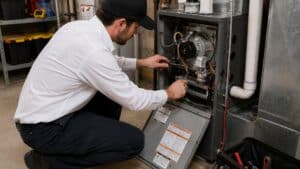
The fix: Have a professional inspect it. A tune up lets a technician test the blower, check airflow, and catch worn parts before they leave you cold on a January night. Our Maintenance Plan is a good way to make sure that happens every year.
What You Can Check Yourself Today
Before you call anyone, take ten minutes and run through this list:
- Replace or check the furnace filter
- Open every supply register in the house and clear anything blocking them
- Close doors and windows in the cold room, and check for drafts
- Make sure the thermostat is set to “heat” and is set higher than the current room temperature
If the room is still cold after all that, it’s time for a closer look.
Cold Room That Won’t Quit? Call Us
We’ve been helping Michigan and Ohio homeowners stay comfortable since 2001. With offices in both Michigan and Ohio, we’re ready to help. Call us at (810) 292-0301 in Michigan or (419) 405-8182 in Ohio and we’ll help you figure out why that one room isn’t keeping up.
Frequently Asked Questions
Why is one room colder than the rest of my house? The most common reasons are a dirty filter, a closed or blocked vent, leaky ducts, or a room that loses heat faster than the others. Starting with the filter and vents is the quickest way to narrow it down.
Should I close vents in rooms I don’t use? We don’t recommend it. Your system is built to move a certain amount of air through the whole house, and closing vents can make airflow uneven and put extra strain on the system.
How do I know if my ducts are leaking? Common signs include rooms that are hard to heat, weak airflow from vents, higher utility bills, and dust problems. A technician can inspect your ducts and confirm.
Can a ductless mini split fix a cold room? Often, yes. A mini split heats and cools a single space on its own, so it works well for additions, finished basements, and rooms the ductwork doesn’t reach well.
Does a cold room mean my furnace is going bad? Not usually. If just one room is cold, the issue is often airflow, ducts, or heat loss in that room. If the whole house is uneven or the furnace is old and struggling, it’s worth having it inspected.
How often should I have my furnace checked? Once a year, ideally before the heating season starts. A yearly tune up catches problems early and helps your system heat evenly.