
A gas furnace doesn’t need a huge generator. The blower motor is the main thing drawing power, and it typically runs on a few hundred watts, but it pulls more for a moment when it starts up, so you want a generator with room to spare. Where the size really climbs is everything else you want running during an outage, like a sump pump, refrigerator, well pump, and lights. An electric furnace is a completely different story and needs far more power. Here’s how to figure out what size makes sense for your home.
Why a Gas Furnace Needs Electricity at All
Many homeowners are surprised that their furnace goes down in a power outage even though it burns gas. The gas provides the heat, but electricity runs almost everything else. The blower that moves warm air through your ducts, the control board, the igniter, and the thermostat all need power.
No power means no airflow, and in a Michigan or Ohio winter that gets uncomfortable fast. That’s the main reason people start asking about generators after a long outage.
How Much Power Does a Furnace Actually Use?
The part of your furnace that uses the most electricity is the blower motor. The size of that draw depends on the motor in your system. Older PSC motors pull more at full speed, and newer ECM motors use substantially less, according to HVACbase. As an example, a blower drawing 500 watts is a realistic ballpark for a gas furnace.
There are two numbers to know when sizing for a furnace:
Running watts. This is what the furnace draws once it’s up and going.
Starting (surge) watts. Motors pull extra power for a moment when they kick on, so the generator has to cover the furnace’s running watts and the blower’s start up surge.
To find your own furnace’s number, look at the rating plate on the unit. Multiply the amps by 120 volts to get a rough wattage. The blower motor also has its own label with its amperage.
Electric furnaces are a separate case. They use heating elements that draw thousands of watts, which usually calls for a much larger generator. If you have an electric furnace, we’d want to look at your system before recommending anything.
What Else You’ll Want to Power
The furnace is rarely the only thing people want running. Add up the essentials before you pick a size:
- Refrigerator and chest freezer
- Sump pump, especially during spring thaw or heavy rain
- Well pump if you’re not on city water
- Lights and phone chargers
- Garage door opener
- Internet router and a TV for outage updates
- Water heater or a window air conditioner, if you want them
Each one adds to the total, and some of them, like pumps and refrigerators, also have a startup surge. The most common mistake we see is sizing a generator for the furnace alone and finding out it can’t carry anything else.
Portable vs. Standby
Both can run a furnace, but they work very differently.
A portable generator is a lower upfront cost, but you have to haul it out, fuel it, and run it outside. Most furnaces are hardwired into your home’s electrical system, so you can’t just plug one into an extension cord. To power one with a portable generator, you’ll need a transfer switch or a generator inlet installed by a licensed electrician.
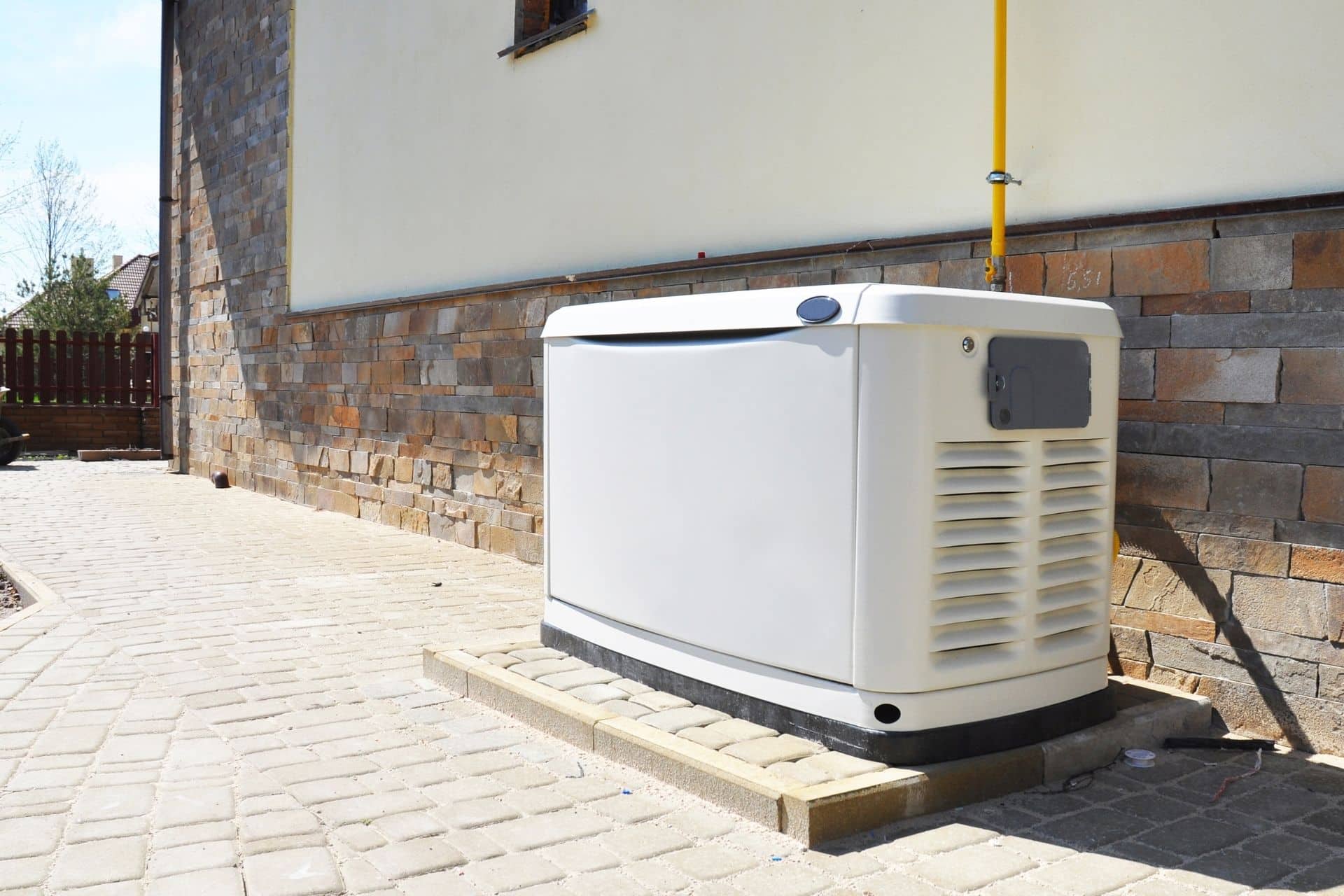
A standby generator is installed outside your home, connects to your electrical panel through an automatic transfer switch, and starts on its own when the power goes out. There’s no dragging a generator out of the garage and no extension cords running through the house. Sizing a standby unit is a bit more involved, because it can cover more circuits, including your HVAC equipment, pumps, and appliances.
Safety Comes First With Any Generator
Generators put out carbon monoxide, and it’s the part of a generator setup that really matters. According to the U.S. Consumer Product Safety Commission, a portable generator should never be used indoors or in a garage, basement, or shed, and should always be outside and well away from windows, doors, and vents. CPSC also notes that carbon monoxide from a generator can kill within minutes and that you can’t see or smell it, so every home needs a working CO alarm. You can read their full guidance on generators and carbon monoxide.
This is also a good reason to have a professional do the installation. Placement, wiring, and the transfer switch all need to be done properly.
How to Size It the Right Way
Here’s the basic process we walk through with homeowners:
- List everything you’d want running in an outage.
- Find the running watts for each item from its label.
- Add them up, then account for the largest starting surge.
- Choose a generator with some breathing room above that total.
- Match the fuel source to what you have, whether that’s natural gas, propane, or gasoline.
If that sounds like a lot, it’s because it can be. That’s why we recommend a professional sizing before you buy, since an undersized generator can trip or fail under load.
How It’s Your Heating & Cooling Guy Can Help
We’ve been family owned and operated since 2001, serving East Central Michigan and Northwest Ohio, and we’re available 24/7 for emergencies. Generators are one of the services we offer, from whole home installation and standby generator replacement to repair, maintenance, and automatic transfer switch service.
We’ll size the system based on what you actually want to power and your home’s electrical needs, including your furnace and other HVAC equipment. Estimates are available, and financing is available for qualifying projects. Reach out through our website to get started before the next storm.
Frequently Asked Questions
What size generator do I need to run a gas furnace?
It depends on your furnace’s blower motor. Many gas furnace blowers draw a few hundred watts while running, plus a short surge when they start. You’ll want a generator that covers both, with room to spare. If you’d also like to run a refrigerator, sump pump, or lights, add those to the total. We can size it for you.
Can I plug my furnace into a portable generator?
Usually not directly. Most furnaces are hardwired into your home’s electrical system. To run one from a portable generator, you’ll typically need a transfer switch or a generator inlet installed by a licensed electrician. Never run an extension cord from a generator into your home through a window or door.
Why does my gas furnace not work when the power is out?
The gas creates the heat, but electricity runs the blower, the igniter, and the control board. Without power, those parts can’t operate, and your furnace won’t heat the house. A properly sized generator is one way to keep it running through an outage.
Is a standby generator better than a portable one?
For most homeowners who want reliable backup heat, yes. A standby generator starts automatically when the power goes out, and it’s wired in through an automatic transfer switch. You don’t have to haul anything out, refuel in the cold, or run cords through the house. A portable generator can still work for some homes, especially with a properly installed transfer switch.
Can I run an electric furnace on a generator?
It’s possible, but it takes much more power. Electric furnaces use heating elements that draw thousands of watts, so the generator has to be much larger. We’d want to look at your system and electrical panel first so we can recommend the right setup.
Is it safe to run a generator in my garage?
No. Generators produce carbon monoxide, a poison you can’t see or smell, and it can kill within minutes. Always run a portable generator outside, well away from windows, doors, and vents, and keep a working CO alarm in your home.
It’s Your Heating and Cooling Guy is proud to serve East Central Michigan and Northwest Ohio, including the Port Huron and Toledo Area. If you are in need of generator services, reach out to us through our website to schedule your service.