
You crank up the AC and wait. One room turns into a walk-in refrigerator while the bedroom down the hall barely feels a difference. Sound familiar? Poor home airflow is one of the most frustrating problems a homeowner can deal with, and it is also one of the most misunderstood. The good news is that most home airflow issues have clear causes and practical fixes, and understanding them can save you real money on your energy bills while making every room in the house genuinely comfortable.
Your HVAC system is only as effective as the air moving through it. When home airflow is restricted, uneven, or completely blocked, the system has to work harder, run longer, and burn more energy just to keep up. Over time, that strain adds up in the form of higher utility bills, premature equipment wear, and rooms that never quite reach the right temperature. Getting your home airflow right is not a luxury. It is the foundation of a comfortable, efficient home, and it is worth understanding exactly what gets in the way.
A Dirty or Clogged Air Filter
If your home airflow has dropped off recently, the first thing to check is your air filter. A clogged filter is the single most common cause of poor home airflow, and it is also the easiest to fix. When a filter is packed with dust and debris, your HVAC system has to fight through that blockage just to pull air in. The result is reduced pressure, weak output at the vents, and a system that runs constantly without ever catching up.
Most filters should be replaced every one to three months, depending on the type and your household conditions. Homes with pets, multiple occupants, or allergy sufferers may need more frequent changes. Checking your filter takes about 30 seconds, and it should be the first step any time your home airflow seems off. A fresh filter is a small investment that can make an immediate and noticeable difference in how well air moves through the entire system.
Blocked or Closed Vents
Blocked or closed vents are another surprisingly common cause of weak home airflow. It might seem logical to close vents in rooms you are not using to redirect the air elsewhere, but that is actually a myth that can cause real damage. Your HVAC system is designed to distribute a specific volume of air throughout the home. Closing vents does not redirect that air; it creates back pressure that strains the blower and unbalances home airflow across every room in the house.
Check every vent in your home to make sure none are blocked by furniture, rugs, curtains, or storage boxes. Supply vents need clear space around them to push air into the room effectively, and return vents need unobstructed access to pull air back to the system. Even a couch placed a few inches in front of a return vent can noticeably affect home airflow, and opening up these pathways is one of the fastest free fixes for weak home airflow you will find.
Leaky or Damaged Ductwork
Leaky ductwork is one of the biggest and most overlooked enemies of good home airflow. According to the U.S. Department of Energy, the typical home loses 20 to 30 percent of the air that moves through the duct system due to leaks, holes, and poorly connected joints. That means a significant portion of the conditioned air your HVAC system produces never actually reaches the rooms it is supposed to serve, leaving you with weak home airflow and higher energy bills.
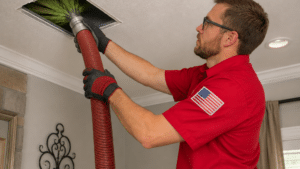
Duct leaks can develop from age, improper installation, pest damage, or simply from the ducts expanding and contracting over many heating and cooling cycles. A professional duct sealing service can locate and seal these leaks, which restores proper home airflow and can dramatically improve both comfort and efficiency. If certain rooms in your home have always felt harder to heat or cool than others, leaky ducts are limiting your home’s airflow and are a very likely culprit worth investigating.
Undersized or Oversized HVAC Equipment
Not all home airflow problems come from the duct system. Sometimes the root cause is the equipment itself. An HVAC system that is too small for your home will run constantly and still struggle to maintain good home airflow and consistent temperatures. A system that is too large will cycle on and off too frequently, which prevents it from properly distributing air throughout the home and often leads to humidity problems on top of uneven home airflow.
Proper HVAC sizing is calculated through a process called a Manual J load calculation, which takes into account your home’s square footage, insulation, window placement, ceiling height, and local climate. If your system was installed without this calculation, there is a real chance it was sized incorrectly, and your home airflow has been suffering for it ever since. A professional HVAC assessment can determine whether your equipment is matched to your home and whether replacing or upgrading it would resolve your home’s airflow issues.
Dirty Evaporator Coils
The evaporator coil inside your air handler is responsible for absorbing heat from the air as it passes through the system. When that coil gets coated in dust and grime, it becomes an insulator rather than a heat exchanger, and home airflow through the system slows dramatically. In severe cases, the coil can ice over completely, which blocks home airflow almost entirely and puts the compressor at serious risk of damage.
Dirty coils are largely preventable with consistent filter maintenance, since a clean filter is what keeps debris from reaching the coil in the first place. Annual professional maintenance includes coil inspection and cleaning, which is one of the best investments you can make for long-term home airflow and system performance. If you notice ice forming on any part of your indoor unit, shut the system off and call a technician right away before the restricted home airflow causes further damage to the compressor.
A Poorly Designed Duct Layout
Signs of a poorly designed duct system include rooms that have always struggled with temperature control, home airflow that has never been strong, even with a well-maintained system, and noisy operation from ducts that are too small for the volume of air being pushed through them. A duct design assessment from a qualified HVAC professional can identify these issues and outline the modifications needed to finally get home airflow balanced throughout the house, often without replacing the entire system.
Sometimes, poor home airflow is not caused by anything breaking down or wearing out. It is caused by a duct system that was never designed correctly in the first place. Ducts that are too small, too long, or filled with sharp bends and turns create resistance that chokes home airflow before it ever reaches the living spaces. This is especially common in older homes, homes that have been added onto over the years, or homes where ductwork was installed as an afterthought.
How to Improve Home Airflow Right Now
Some home airflow improvements are things you can tackle today without any tools or professional help. Start by replacing your air filter if it has not been changed recently. Open every vent in the house and move any furniture or objects that might be blocking supply or return registers. These two steps alone can produce a noticeable improvement in home airflow within hours, and they cost next to nothing to do.
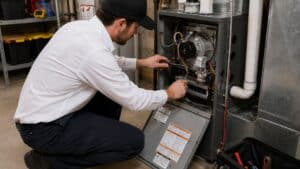
For more persistent home airflow problems, the path forward involves a professional inspection. A qualified HVAC technician can test static pressure throughout your duct system, check for leaks, assess equipment sizing, inspect the evaporator coil, and identify any design flaws that are limiting your home’s airflow. Armed with that information, you can make targeted, cost-effective improvements rather than guessing at the problem and spending money in the wrong places.
Let Us Help You Get Your Home Airflow Back on Track
If you have been dealing with uneven temperatures, weak vents, or rooms that never feel quite right, the problem is almost certainly a home airflow issue that has a real solution. The team at It’s Your Heating and Cooling Guy has the tools and experience to diagnose exactly what is limiting your home’s airflow and get it corrected efficiently and affordably. We do not guess at problems. We find them, explain them clearly, and fix them the right way.
You deserve a home where every room is comfortable, and your HVAC system is not working overtime just to keep up. Contact It’s Your Heating and Cooling Guy today to schedule an inspection and take the first step toward a home that finally feels the way it should, in every room, every season.