
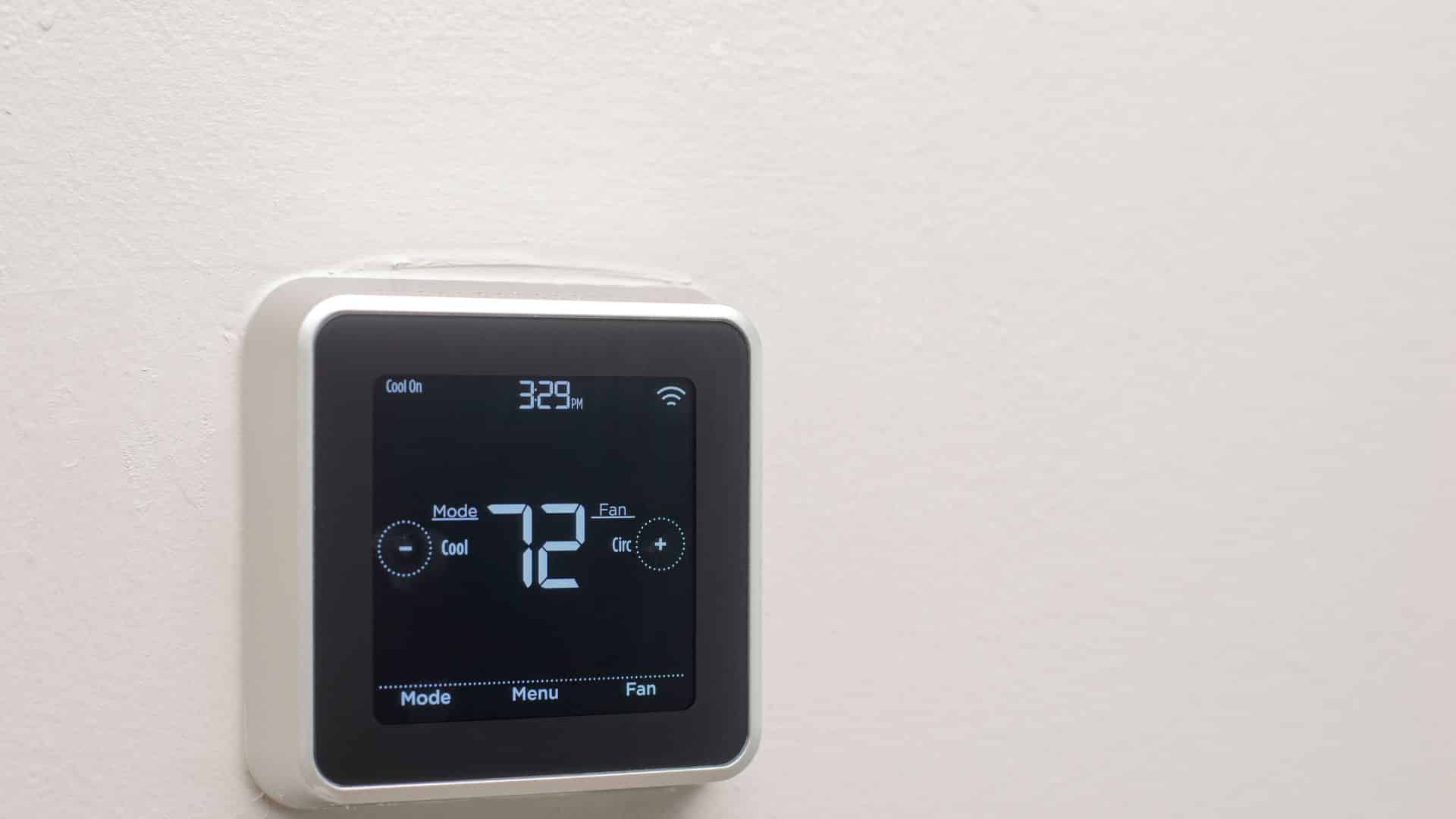
Your heating and cooling system is probably the hardest-working piece of equipment in your home, and it is also the most expensive to run. If you are still controlling it with a basic manual or programmable thermostat, you are almost certainly leaving money on the table every single month. A smart thermostat is one of the simplest upgrades you can make to your home, and unlike most home improvement projects, this one pays you back.
A smart thermostat does not just let you adjust the temperature from your phone, though that is a convenient perk. It learns your patterns, responds to your schedule, and makes automatic adjustments that keep your system from running when it does not need to. Over the course of a year, that intelligence adds up to real savings that most homeowners never realize they are missing out on until they finally make the switch.
What Makes a Smart Thermostat Different
A basic programmable thermostat lets you set a schedule in advance and stick to it. A smart thermostat takes that concept several steps further by actively adapting to how you actually live. It uses sensors, Wi-Fi connectivity, and machine learning algorithms to figure out when people are home, when they leave, and what temperatures they prefer at different times of day. It then builds and refines a schedule automatically, without any manual input required.
Most smart thermostat models also integrate with weather data, adjusting in advance for temperature swings before they hit your home. Some connect with smart home ecosystems like Google Home or Amazon Alexa, allowing voice control and coordination with other devices. Others include features like humidity sensing, air quality monitoring, and energy usage reports that give you a detailed picture of exactly how much you are spending on climate control and where the opportunities to save are hiding.
How Much Can a Smart Thermostat Actually Save?
The savings from a smart thermostat are not trivial. According to the U.S. Department of Energy, homeowners can save as much as 10 percent per year on heating and cooling costs simply by adjusting the thermostat 7 to 10 degrees for eight hours a day. It automates exactly this kind of adjustment without any effort on your part, applying setbacks when you leave for work and restoring comfort before you return home.
Some smart thermostat manufacturers report even higher savings in real-world use. A properly configured unit in a climate with distinct heating and cooling seasons can shave 10 to 15 percent off heating bills and 15 percent or more off cooling costs. When you consider that heating and cooling accounts for roughly half of most home energy budgets, a smart thermostat that delivers even modest efficiency gains pays for itself within the first year or two of use.
Smart Thermostat Types: Feature and Savings Comparison
| Thermostat Type | Key Features | Est. Annual Savings | Best For |
| Manual thermostat | Basic dial or digital control | None | No specific use case |
| Programmable thermostat | Fixed schedules, no learning | Up to 10% | Consistent daily schedules |
| Smart thermostat (basic) | Wi-Fi, app control, scheduling | 10 to 15% | Remote workers, renters |
| Smart thermostat (learning) | Auto-scheduling, occupancy sensing, weather integration | 15 to 23% | Busy households, max savings |
The Features That Drive Real Savings
Not every feature on a smart thermostat contributes equally to energy savings. The ones that move the needle the most are geofencing, occupancy sensing, and adaptive recovery. Geofencing uses your phone’s location to detect when you leave the house and automatically shifts the smart thermostat into an energy-saving mode. When you are on your way home, it starts bringing the temperature back to your preferred setting so you walk into a comfortable house without having wasted energy all day.
Occupancy sensing takes geofencing a step further by using motion detectors or infrared sensors inside the smart thermostat itself to determine whether anyone is actually in the home. This matters on days when your schedule is unpredictable, since it can respond in real time rather than following a fixed schedule that may no longer match your life. Adaptive recovery is the feature that calculates how long your HVAC system needs to run to reach the target temperature, so the system finishes heating or cooling exactly when you need it rather than starting early and overshooting.
Energy usage reports are another underrated feature of a well-designed smart thermostat. These reports break down your heating and cooling consumption by day, week, or month and often show you which behaviors or settings are costing the most. For homeowners who have never tracked this data before, the first energy report from a new device can be genuinely eye-opening and motivating.
Does a Smart Thermostat Work With Any HVAC System?
Most smart thermostat models are compatible with the majority of residential HVAC systems, including central forced-air heating and cooling, heat pumps, and multi-stage systems. However, compatibility does vary, and it is worth checking before you buy. The most common compatibility issue involves systems that use a C-wire, or common wire, to provide a continuous power supply to the thermostat. Some older homes do not have a C-wire installed, which can prevent certain smart thermostat models from functioning properly.
A professional smart thermostat installation sidesteps these compatibility headaches entirely. An HVAC technician can verify your system’s wiring, confirm compatibility with the model you have chosen, and handle the installation correctly the first time. Given that a smart thermostat is meant to save you money over the long term, it makes sense to start the relationship off right with a clean, professional setup rather than guessing through a DIY process.
Common Mistakes That Reduce Smart Thermostat Savings
A smart thermostat is only as effective as the way it is set up and used. One of the most common mistakes homeowners make after installing a smart thermostat is constantly manually overriding it. Every time you bump the temperature up or down outside of the learned schedule, you are undermining the efficiency gains it is working to deliver. Occasional adjustments are fine, but frequent manual changes teach the device habits that cost more rather than less.
A smart thermostat installed in a poor location is another mistake that limits its performance. One installed near a drafty window, in direct sunlight, or adjacent to a heat-generating appliance will read temperatures inaccurately and make decisions based on bad data. Your HVAC technician can advise on the best mounting location to ensure the smart thermostat senses the actual temperature of your living space and responds accordingly.
Skipping the setup of the smart thermostat’s home and away parameters is perhaps the most costly oversight of all. Many homeowners unbox a smart thermostat, connect it to Wi-Fi, and assume it will figure everything out on its own. While learning thermostats do eventually adapt, giving the device accurate information about your schedule and household occupancy at the start dramatically shortens the learning curve and gets you to maximum savings much faster.
Pairing a Smart Thermostat With a Well-Maintained System
A smart thermostat is a powerful tool, but it cannot compensate for an HVAC system that is not running efficiently on its own. If your furnace has a dirty filter, your ducts are leaking conditioned air, or your AC coils are coated in grime, the smart thermostat will try to hit your target temperatures by running the system longer and harder. You will still see some savings compared to a manual thermostat, but you will not see anywhere near the full potential.
The best results come from pairing a professionally installed smart thermostat with an HVAC system that is properly maintained. Clean filters, sealed ducts, and a tuned-up furnace or air conditioner give the smart thermostat clean, efficient equipment to work with, and the combination delivers the kind of savings that make a real difference on your monthly bills. According to ENERGY STAR, certified smart thermostat models are independently verified to deliver meaningful energy savings, and pairing them with a well-maintained HVAC system is the most effective way to maximize every dollar.
Ready to Install a Smart Thermostat? We Can Help.
If you have been thinking about upgrading to a smart thermostat, there has never been a better time to make the move. The technology has matured, the savings are well-documented, and the installation process is straightforward when handled by a professional who knows HVAC systems inside and out. At It’s Your Heating and Cooling Guy, we help homeowners select the right smart thermostat for their system, handle the installation correctly, and make sure the device is fully configured for maximum performance from day one.
Do not spend another season overpaying on energy bills with an outdated thermostat when a smarter option is well within reach. Contact us today to schedule your smart thermostat installation and start saving on every heating and cooling bill from here on out.
Frequently Asked Questions
How much money does a smart thermostat save per year?
The actual savings depend on your home size, climate, and current energy habits, but most homeowners see a 10 to 23 percent reduction in heating and cooling costs after installing a smart thermostat. For the average household that spends around $900 per year on heating and cooling, that translates to roughly $90 to $200 in annual savings. A smart thermostat typically pays for itself within one to two years of installation.
Is a smart thermostat worth it if I work from home?
Yes, a smart thermostat is still worth it for remote workers, though the savings come from different features. Rather than geofencing, a smart thermostat for a work-from-home household delivers value through precise scheduling, humidity control, and energy reporting that helps you identify and eliminate waste. Some models also offer room-by-room temperature management, which lets you heat or cool only the spaces you are actually using throughout the day.
Can I install a smart thermostat myself?
Many smart thermostat models are marketed as DIY-friendly, and technically straightforward installations in newer homes often go smoothly. However, homes with older wiring, missing C-wires, or multi-stage HVAC systems can run into compatibility issues that require professional attention. Having a technician handle the installation ensures the device is wired correctly, fully compatible with your system, and configured properly from the start so you get the savings right away rather than troubleshooting first.
Does a smart thermostat work with a heat pump?
Most modern smart thermostat models are compatible with heat pump systems, but it is important to verify compatibility before purchasing since heat pumps require specific thermostat configurations. Look for a smart thermostat that explicitly lists heat pump support and includes settings for auxiliary or emergency heat. A professional installation is especially recommended for heat pump systems to ensure all operating modes are set up correctly.
What smart thermostat brand is best for saving energy?
Several brands consistently rank highly for energy savings, including Google Nest, Ecobee, and Honeywell Home. All three offer ENERGY STAR certified models with strong learning capabilities, geofencing, and detailed energy reporting. The best choice for your home depends on your HVAC system type, your smart home ecosystem, and your budget. Our technicians can recommend the right model based on your specific setup and help you get it installed and optimized for maximum performance.
How long does it take a smart thermostat to learn my schedule?
Most learning smart thermostat models build an initial schedule within the first one to two weeks of use by observing when you adjust the temperature and when the home is occupied. The more consistent your routine, the faster the smart thermostat learns. Setting up your preferred schedule and occupancy parameters manually at the start can shortcut this process significantly and get you to full efficiency much sooner than simply leaving it to figure things out on its own.
It’s Your Heating and Cooling Guy proudly serves St. Clair County, Sanilac County, Lapeer County, Macomb County, Oakland County, and Genesee County. Questions about smart thermostat installation or any of our heating and cooling services? Contact our team today.